

Newspapers vs anchors
JournalismPakistan.com | Published: 21 March 2013 | Z. B. Saigol
Join our WhatsApp channel
The article discusses how technology has transformed news consumption in Pakistan. It highlights the contrasting roles of newspapers and television anchors in the modern media landscape.Summary
Came across this interesting piece about how technology has changed our everyday life in so many ways in what we do or no longer do, or do differently. It got me pondering about how we no longer use bulky cameras but smart phones to take and send pictures to our friends and families when we are not battering them with texted messages through the same. Then there’s Facebook that ever convenient social forum where we can air our opinions about whatever and whomever, whenever.
We use Google for information on any and everything, even directions. We get our wages directly in our banks. We purchase things online. It’s all so convenient.
And yet the old argument goes on: If all this info and facilities are so easily and instantly available why do we need newspapers?
It’s human nature to crave information and news. Newspapers, magazines and television used to be how we satisfied our need for info and news. But now it’s mostly online, instantly… and better still, it’s free.
Some traditionalists, including my good friend Jamshed, say a newspaper may not have the same value or utility it once did, but is nonetheless part and parcel of many people’s daily life. “It’s habit as need to hold on something tangible,” Jamshed insisted. “It has something to do with ownership as well.”
He may have a point.
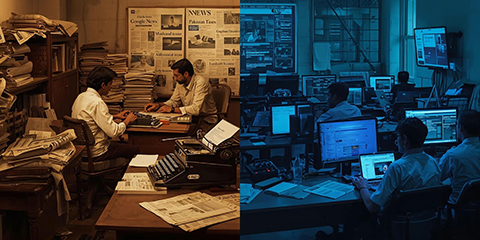
However, there is no doubt that newspapers the world over are not the morning ‘must’ they once used to be. Many newspapers have died and been buried. Others barely have their heads above the water. Staff has been cut to the bare minimum; specialization and outsourcing have become the way to go.
In Pakistan too we have seen a number of newspapers promise a lot and then disappear into the night. At the same time newspapers in Pakistan still have quite a hold despite the many news channels that have mushroomed over the last decade and a half.
“Somehow news channels do not have the same credibility as our newspapers. That is why many people still get up to three different newspapers at home,” a professor at the Punjab University’s Journalism Department explained to me.
“Just take a look at our anchors. They are more actors than newsmen. Most of them are also politically ideologically aligned in one way or the other and this gives their views and information a definite tainted aspect. On the other hand trusted columnists and their opinions are valued. A newspaper has a pedigree built over trust built over years. One cannot take this away just like that.”
I tend to agree with him and so do others.
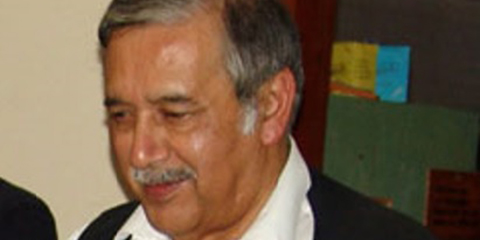
Muhammad Malick, former editor of The News, said at a conference on gender and media organized by the White Ribbon Campaign Pakistan, that anchors do not represent the real media and that people should not assess the media by looking at the anchors.
So true.
Given the antics one is witness to daily on the aptly named ‘idiot box’ I’d much rather read a newspaper than watch those charlatans and pseudo intellectuals blather on about what they don’t know.
It’s time channels got educated people as anchors rather than these political puppets and paid mouthpieces.
And one another thing, has anybody ever watched foreign channels and noticed how there is a team of anchors who do the same program?
So why is it that our channels make movie stars of our so-called anchors? They should never be allowed to hog a show. Their's is a very specific job. If they do not have what it takes to do it honestly, they should not.
We need real journalists.
But for the time being, I’ll stick to my newspaper.... bad as it is, bulky, old fashioned and paid for. Not all things free are good.
KEY POINTS:
- Technology has changed the way people consume news.
- Newspapers retain credibility despite digital competition.
- Television anchors are perceived as less trustworthy compared to traditional journalism.
- Many newspapers in Pakistan continue to have a loyal readership.
- The article critiques the performance of modern news anchors.