
.png)
Electioneering and TV - a new alliance
JournalismPakistan.com | Published: 11 November 2013 | Daud Malik
Join our WhatsApp channel
The 2013 General Elections marked a significant shift in how political parties communicated with voters, leveraging electronic media effectively. With more channels available, political messaging became more widespread through advertisements on TV and in print.Summary
ISLAMABAD: The 2013 General Elections were the first in Pakistan’s history after a civilian government had completed its constitutional term and the power was peacefully handed over to a civilian successor.
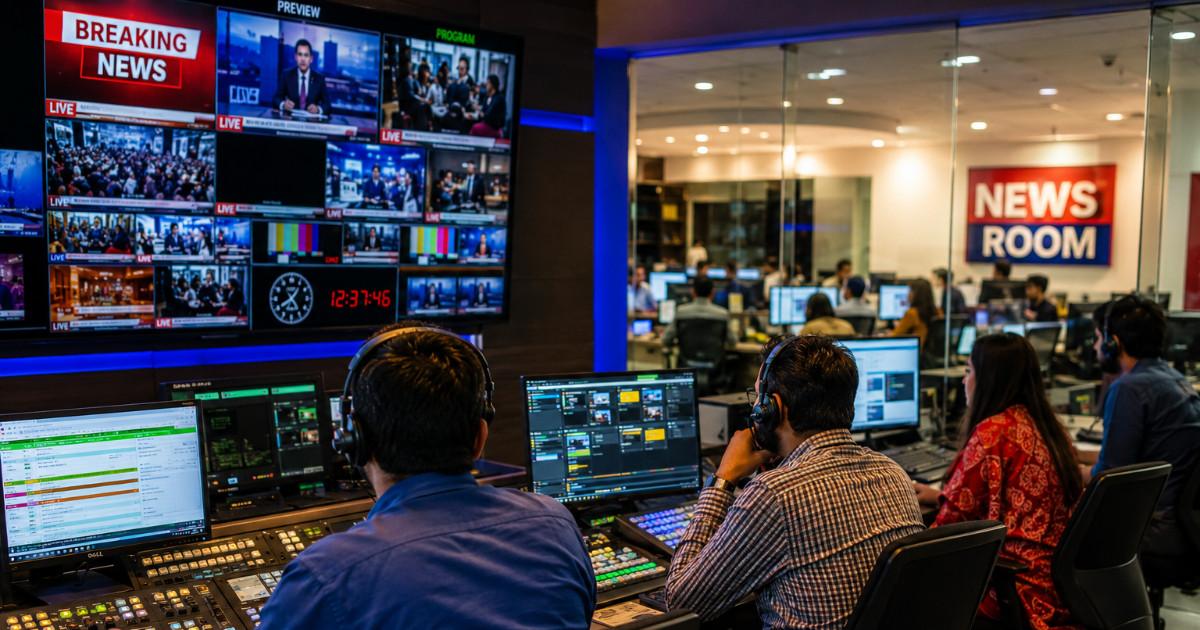
The elections were also the first in which the political parties made extensive use of the electronic media – from highlighting their manifestoes, plans, promises to berating the opponents.
According to a BBC report, in 2000 there were just three television channels in Pakistan, all of them owned by the state. Fast forward 2013 - the country has 89 privately owned TV channels and 115 FM radio stations, along with the traditional print media. The report said: “Across the country, access to news and information and the capacity of individuals to communicate with fellow citizens has been radically altered.”
This radically altered context of communication became evident during the campaign for the General Elections. The figures back the new way of electioneering.
An MQM legislator during the question hour in the National Assembly asked about the party-wise details of advertisements published in newspapers and telecast by private TV channels in April and May 2013 during the election campaign.
The fifth session of the 14th National Assembly was told in October 2013 that in eight dailies - The News, Dawn, The Nation, Pakistan Observer, The Express Tribune, Jang, Nawa-e-Waqt and Express - 329 advertisements on the election campaign of political parties were published between April 1 and May 10, 2013.
According to the reply in the Lower House, most of the advertisements - 163 - were given by then ruling party – Pakistan Peoples Party Parliamentarians (PPPP), followed by Pakistan Muslim League-Nawaz (PML-N) 51 and Pakistan Tehreek-e-Insaf (PTI) 49. As a ruling party, the PPPP ads tried to highlight its contribution to improving governance and economy.
Jamaat-e-Islami ran a total of 33 ads in the newspapers as the party made a comeback to the National Assembly by winning three seats in the General Elections. Awami National Party, which was the ruling party in Khyber Pakhtunkhwa, only gave two ads in the print media.
However, the political parties’ preference was the electronic media – the TV channels. According to a European Union report on the General Elections, “the time granted for the paid-for content was extremely high, far exceeding the time allocated to election-related debate programs…”
The National Assembly was told that the political parties ran a total of 62,622 advertisements on election campaign. These ads, according to the reply, were aired on 69 TV channels from March 17 to May 11, 2013.
Again the PPPP sponsored the most ads (26,237) on 51 TV channels. PTI’s 16,363 ads about its election campaign were telecast on 56 TV channels, followed by PML-N’s 12,521 ads on 50 channels. In other words the three big parties relied heavily on TV channels.
Interestingly, the PMLQ, which only gave three ads in the print media about its election campaign, ran 1978 advertisements on 25 TV channels. Similarly, the MQM had 1482 ads on 29 TV channels, compared to its only eight ads in the national dailies.
Though the fate of the local government elections is unknown given the haste and the confusion prevailing at present, whenever they are held, it will be interesting to see how much the political parties are ready to invest in telling the voter about their plans and promises about the ‘local democracy’.
Key Points
- The 2013 general elections were Pakistan’s first peaceful civilian-to-civilian transfer of power after a full term.
- Political parties increasingly utilized electronic media for campaigning.
- PPP, PTI, and PML-N dominated TV advertisements during the campaign.
- A total of 62,622 ads were aired across 69 TV channels.
- The impact of media on voter communication has drastically changed.
Relevant Topics
Ask AI: Understand this story your way
AI EnabledDig deeper, ask anything — get instant context, background, and clarity.
Disclaimer: This feature is powered by AI and is intended to help readers explore and understand news stories more easily. While we strive for accuracy, AI-generated responses may occasionally be incomplete or reflect limitations in the underlying model. This feature does not represent the editorial views of JournalismPakistan. For our full, verified reporting, please refer to the original article.