
.png)
Pakistan Media Monitor | Edition 4 | July 7-20, 2026
JournalismPakistan.com | Published: 20 July 2026 | JP News Desk
Join our WhatsApp channel
Between July 7 and 20, 2026 Pakistan's media ecosystem faced intensified pressures as legal actions against journalists, expanded broadcast compliance rules, newsroom layoffs and surveillance worries converged. The period underscored tensions between regulation, financial strain and digital risks.Summary
JournalismPakistan's biweekly review of Pakistan's journalism, television, digital media, press freedom, regulation, and media business.
Introduction
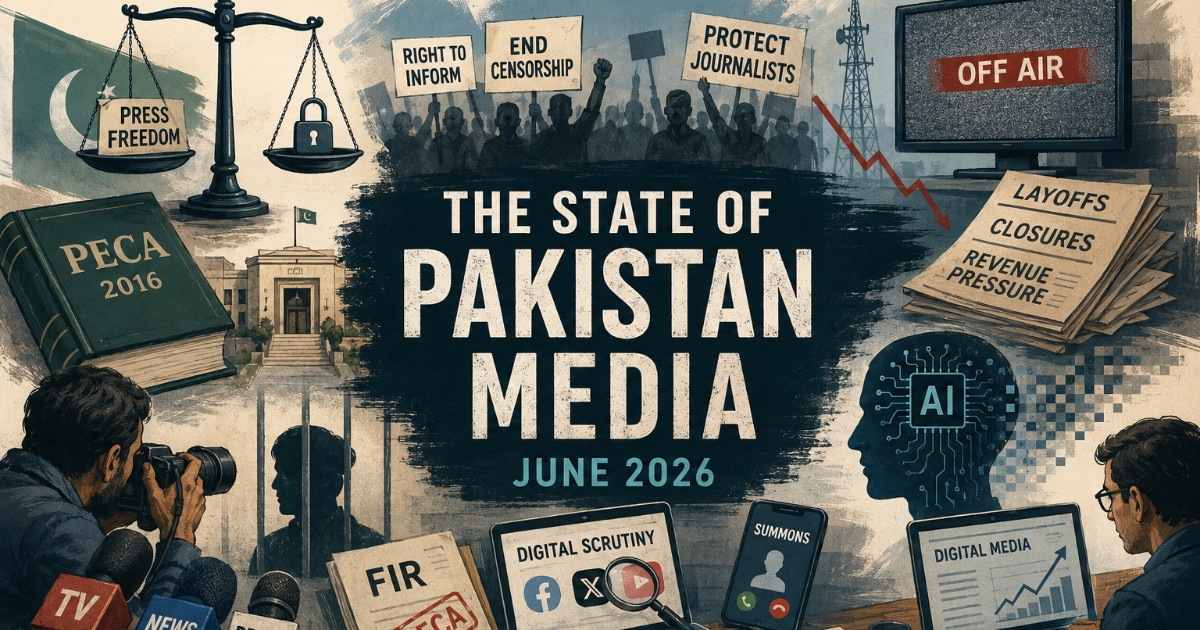
Pakistan's media landscape remained under sustained pressure during July 7–20, 2026, as legal proceedings involving journalists, expanded broadcast regulation, newsroom layoffs, and growing concerns over digital surveillance underscored the increasingly complex challenges confronting the country's news industry.
The review period reflected how regulatory oversight, economic uncertainty, and technological change continue to reshape journalism in Pakistan. Court decisions involving media professionals, new compliance requirements imposed on television broadcasters, financial pressures affecting local newsrooms, and concerns over cyber surveillance highlighted the growing intersection of law, technology, business sustainability, and press freedom. This edition of Pakistan Media Monitor examines the developments that shaped journalism, broadcasting, digital media, regulation, and the media business across Pakistan over the past two weeks.
Editor's note
The stories featured in this edition reveal a media industry facing growing pressure from multiple directions at once.
The legal cases involving Syed Farhad Ali Shah and Rehan Tariq demonstrate how journalists continue to face increasing legal scrutiny under preventive detention laws and cybercrime legislation, while the sentencing in the Mureed Abbas murder case brought closure to one of Pakistan's most significant crimes involving a television journalist and renewed discussion about accountability for violence against media professionals.
Regulatory intervention also intensified. PEMRA's decision to convert the Geo News case into an industry-wide compliance framework is likely to reshape editorial processes across Pakistan's television sector, even as the Pakistan Federal Union of Journalists questioned the regulator's authority to endorse disciplinary measures against newsroom employees.
Economic challenges remain equally significant. Layoffs at Rohi TV and JournalismPakistan's investigation into the worsening financial conditions of district journalists illustrate that newsroom sustainability is inseparable from discussions of press freedom. At the same time, growing concerns over cyber surveillance, restricted media access to government briefings, and continued demands for accountability in the Arshad Sharif case demonstrate that transparency, journalist safety, and editorial independence remain central issues for Pakistan's media community.
Top story
PEMRA turns Geo News ruling into industry-wide compliance framework
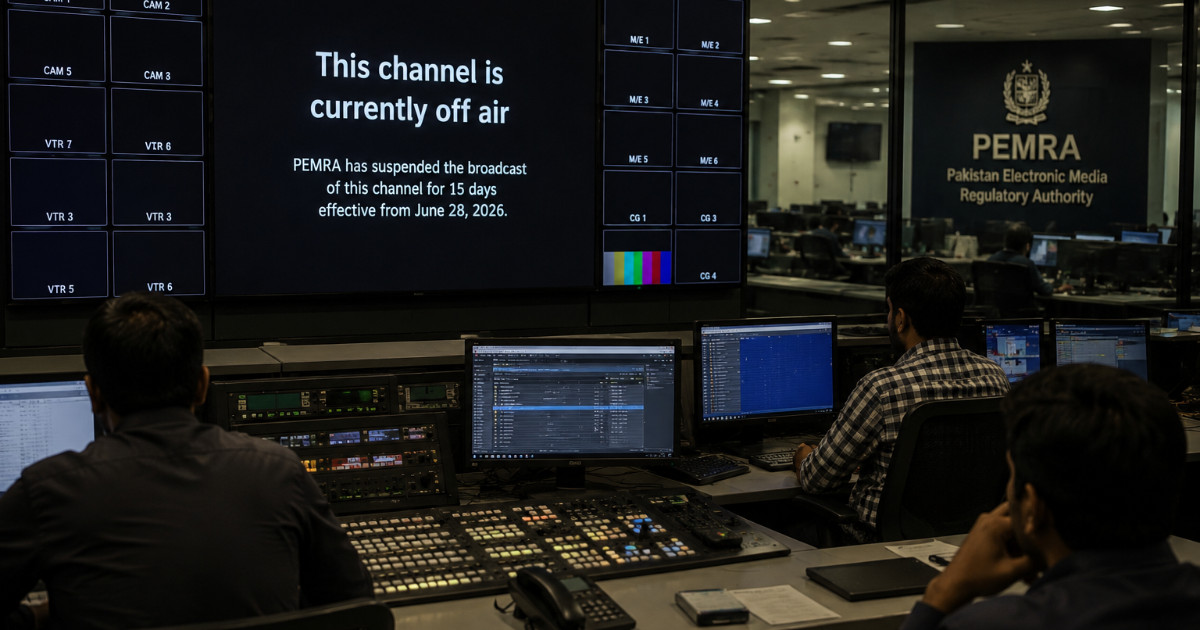
The Pakistan Electronic Media Regulatory Authority (PEMRA) significantly expanded the impact of its disciplinary action against Geo News by transforming the case into a regulatory benchmark for Pakistan's entire television industry. While upholding the broadcaster's 15-day suspension and Rs10 million fine, the regulator directed all licensed television channels to establish impartial editorial monitoring committees, strengthen internal review mechanisms for sensitive programming, and reinforce editorial compliance before broadcast.
The decision extends the significance of the Geo News case well beyond a single broadcaster. Rather than limiting enforcement to one alleged violation, PEMRA has effectively introduced a new compliance model that is expected to influence editorial management practices throughout Pakistan's television sector. Broadcasters are now likely to devote greater attention to internal legal review, editorial documentation, and pre-publication oversight when covering politically, religiously, or socially sensitive issues.
The ruling has also reopened debate over the balance between regulatory oversight and editorial independence. Supporters argue that stronger compliance procedures can improve editorial accountability and reduce the risk of regulatory violations. Critics, however, warn that expanded oversight requirements may encourage excessive caution within newsrooms, increasing self-censorship and limiting robust public-interest reporting on controversial issues.
The debate widened further after the Pakistan Federal Union of Journalists challenged PEMRA's endorsement of disciplinary action against Geo News employees, arguing that employment matters fall outside the regulator's legal authority. The disagreement raises broader questions about where responsibility for editorial decisions should ultimately rest: individual newsroom employees, editorial management, or media organizations themselves.
For Pakistan's television industry, the July 11 decision represents more than a regulatory order. It signals a shift toward stricter institutional compliance that is likely to influence newsroom governance, editorial workflows, risk management, and regulatory relations long after the Geo News case itself concludes.
Key themes
- Regulatory oversight expanded beyond individual enforcement as PEMRA introduced new editorial compliance requirements for all television broadcasters.
- Preventive detention laws and PECA continued to feature prominently in cases involving journalists and digital media.
- Press freedom organizations intensified calls for accountability in journalist safety cases, including renewed international attention on the killing of Arshad Sharif.
- Newsroom sustainability remained under pressure as layoffs and worsening financial conditions affected journalists across both national and district media.
- Concerns over cyber surveillance, government transparency, and media access highlighted the growing intersection of digital rights and journalism.
- Administrative decisions affecting court reporters and access to official briefings renewed debate over transparency and journalists' ability to report independently.
Journalist arrests and legal cases
CPJ calls for the release of Kashmir journalist — The Committee to Protect Journalists (CPJ) has called on authorities in Pakistan-administered Kashmir to immediately release journalist Syed Farhad Ali Shah, who was detained under the Maintenance of Public Order Ordinance after reporting on protests organized by the banned Joint Awami Action Committee. CPJ said the use of preventive detention against a journalist carrying out his professional duties raises serious concerns about press freedom and the ability of reporters to cover politically sensitive developments ahead of regional elections. (Committee to Protect Journalists, July 8, 2026)
The case is significant because it extends beyond one journalist's detention. It illustrates how preventive public-order legislation can intersect with news reporting, particularly during periods of heightened political sensitivity. International media rights organizations are likely to continue monitoring the case closely as an indicator of the environment for journalists reporting on governance, security, and electoral developments in Pakistan-administered Kashmir.
Court delivers verdict in Mureed Abbas murder case — A Karachi court has sentenced Atif Zaman to death twice for the murders of television anchor Mureed Abbas and businessman Khizar Hayat, bringing to a close one of Pakistan's most closely followed criminal cases involving a media professional. The court also issued permanent arrest warrants for co-accused Adil Zaman, who remains a proclaimed offender. (Court information, July 9, 2026)
The verdict represents an important milestone in a case that has remained a symbol of the dangers journalists can face beyond traditional reporting-related threats. While the killings stemmed from a financial dispute rather than Abbas' journalistic work, the case has remained deeply significant within Pakistan's media community. It is expected to continue serving as an important reference point in discussions about accountability, criminal justice, and the protection of media professionals.
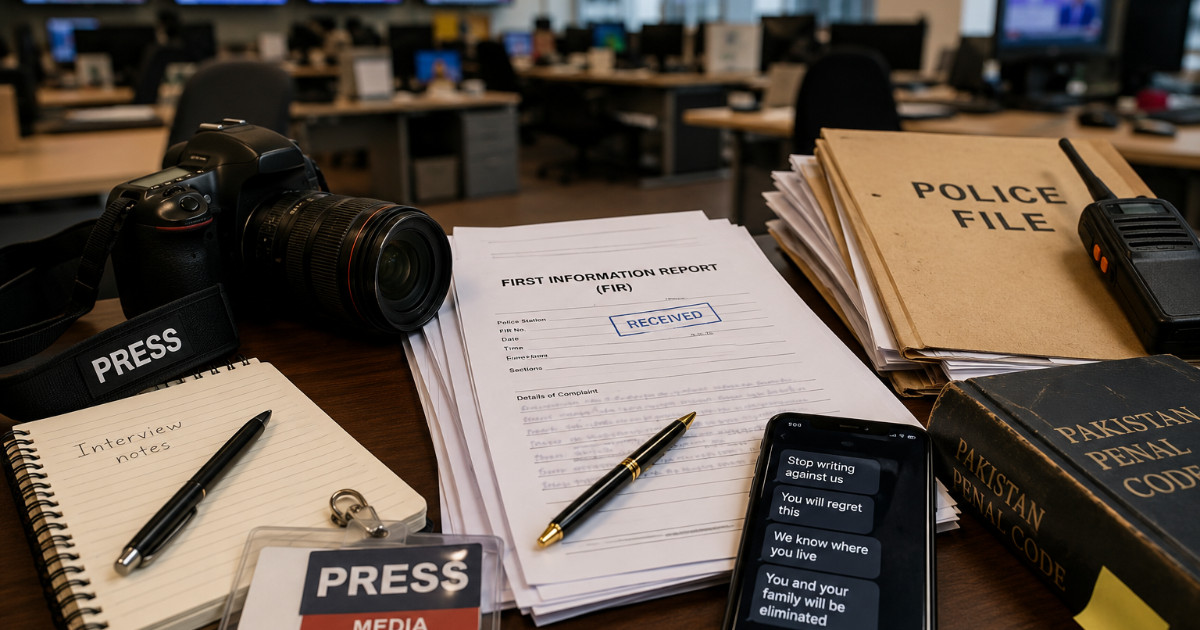
Court rejects Rehan Tariq's bail after judicial remand — A Lahore court rejected the post-arrest bail application of journalist, television anchor, and podcast host Rehan Tariq in a case involving provisions of the Pakistan Penal Code and the Prevention of Electronic Crimes Act (PECA). Tariq had earlier been sent to judicial remand after completing six days in the custody of the National Cyber Crime Investigation Agency (NCCIA). During the investigation, his legal team submitted opinions from several religious scholars arguing that remarks made during his podcast did not amount to religious disrespect. Following the court's decision, defense counsel Mian Dawood criticized the ruling, arguing that it departed from established Supreme Court and Lahore High Court precedents governing post-arrest bail. (Mian Dawood Law Associates on X, July 14, 2026; Mian Dawood statement, July 16, 2026)
The proceedings have become one of the most closely watched legal cases involving Pakistan's digital media sector because they combine cybercrime legislation with allegations arising from online journalism and podcast content. The outcome is likely to be closely followed by journalists, digital publishers, and legal observers as another important test of how PECA and related criminal laws are applied to content produced for digital platforms. The case also reflects the growing legal scrutiny facing independent online journalism as podcasts and digital-first news formats become increasingly influential within Pakistan's media landscape.
Press freedom and journalist safety
Nine journalist safety incidents documented across Pakistan in June — Freedom Network's Pakistan Press Club Safety Hubs Network documented nine incidents affecting journalists during June 2026, including PECA-related legal action, arrests, physical assaults, death threats, newsroom intimidation, and regulatory proceedings. Covering incidents in Punjab, Khyber Pakhtunkhwa, and Islamabad, the report illustrates the broad spectrum of risks confronting journalists reporting on corruption, governance, crime, and other public-interest issues. According to the network, state institutions were identified as the alleged threat actors in most documented cases. (Freedom Network Pakistan Press Club Safety Hubs Network, June 2026)
The findings reinforce concerns that threats to journalists increasingly extend beyond physical violence to include legal pressure, regulatory action, and institutional intimidation. The diversity of incidents also suggests that press freedom challenges in Pakistan are becoming more complex, requiring stronger legal protections, improved safety mechanisms, and continued monitoring by press freedom organizations.
IFJ, PFUJ criticize lack of accountability in Arshad Sharif case — The International Federation of Journalists (IFJ) and the Pakistan Federal Union of Journalists (PFUJ) have renewed calls for accountability following Kenya's Supreme Court ruling that the killing of Pakistani journalist Arshad Sharif was unlawful. The IFJ said that "a finding of unlawfulness without prosecution or accountability is not justice; it is impunity," urging Kenyan authorities to bring those responsible before the courts. PFUJ similarly argued that the continued absence of criminal accountability undermines both Kenya's constitutional obligations and international law while representing an attack on press freedom worldwide. (IFJ, July 15, 2026)
The statements ensure that the Arshad Sharif case remains one of the most significant international press freedom issues involving Pakistan. Beyond the legal judgment itself, the continued demands for prosecution demonstrate how accountability has become a defining issue in attacks on journalists, particularly where incidents involve multiple jurisdictions and prolonged legal proceedings.
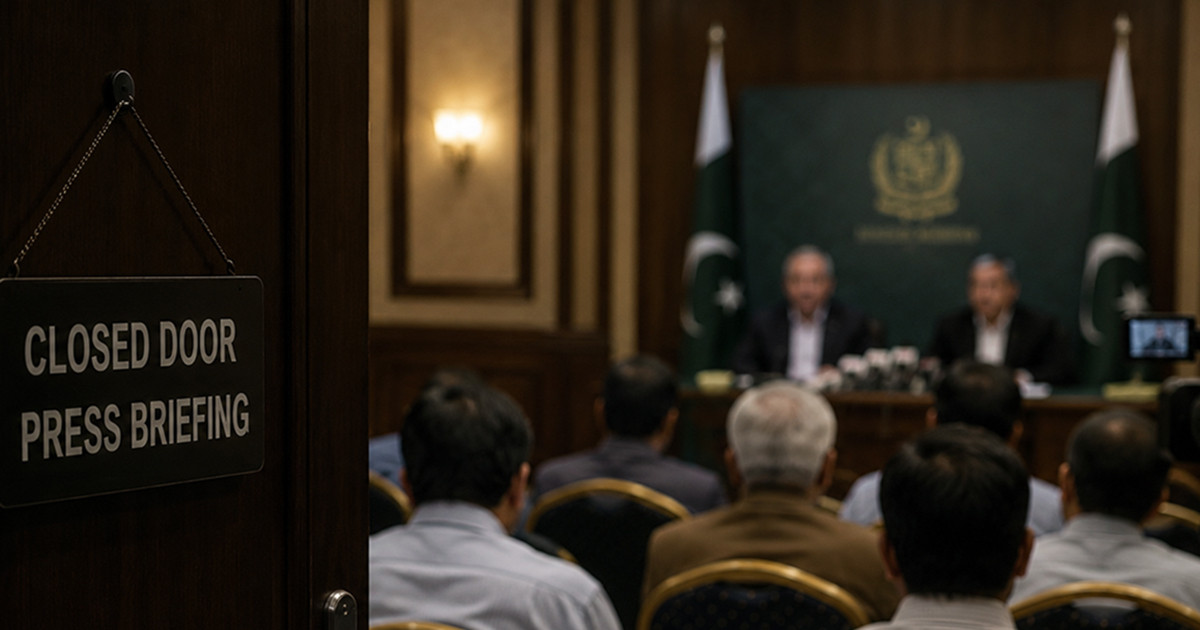
Journalists criticize restricted access to fuel pricing briefing — Senior journalists criticized the government's decision to exclude energy correspondents from a media briefing announcing proposed changes to Pakistan's petroleum pricing mechanism. Rather than focusing on the policy itself, reporters questioned why accredited journalists covering the energy sector were denied the opportunity to attend and ask questions on an issue with significant public and economic implications. The episode highlights an often overlooked aspect of press freedom: meaningful access to official information. Transparent government communication depends not only on issuing statements but also on allowing journalists to seek clarification and challenge officials through open questioning. Restrictions on newsroom access during major policy announcements risk weakening public accountability and limiting the quality of reporting available to citizens. (JournalismPakistan, based on public X posts by journalists and official government announcements, July 17, 2026)
Broadcast, regulation, and policy
PFUJ opposes PEMRA action against Geo News employees — The Pakistan Federal Union of Journalists (PFUJ) has criticized PEMRA's endorsement of disciplinary measures against lower-level Geo News employees, arguing that the regulator has exceeded its statutory authority by entering matters relating to employment and labor relations. The union maintained that questions concerning disciplinary action against employees fall within the jurisdiction of employers and the courts rather than a broadcast regulator. (PFUJ statement, July 12, 2026)
The disagreement has broadened the debate surrounding the Geo News case beyond editorial regulation alone. It raises important questions about accountability within media organizations and whether responsibility for editorial decisions should rest primarily with reporters and producers or with senior editorial management responsible for approving content. The outcome of this debate may influence future discussions on newsroom governance, employment protections, and the limits of regulatory authority over media organizations.
Digital media and social platforms
DRF USA report raises concerns over cyber surveillance — A report published by DRF USA has warned that Pakistan's expanding cyber surveillance capabilities, including lawful interception systems, internet monitoring technologies, and broader legal powers—pose growing challenges for journalists, digital rights advocates, and independent media organizations. The study argues that surveillance capabilities have developed more rapidly than the legal and institutional safeguards needed to ensure accountability, creating increased risks for press freedom, source confidentiality, and personal privacy. It recommends stronger judicial oversight, comprehensive privacy legislation, and greater transparency regarding surveillance practices. (DRF USA, July 17, 2026)
The report is particularly relevant for Pakistan's journalism community because confidential communication between reporters and their sources remains fundamental to investigative reporting. Concerns over surveillance may discourage whistleblowers from sharing information and complicate journalists' ability to protect sensitive sources, especially when reporting on corruption, governance, national security, or politically sensitive issues.
As Pakistan's news industry becomes increasingly dependent on digital communication and online publishing, debates surrounding surveillance are likely to become central to discussions about press freedom. The report adds to growing calls for stronger legal protections that balance national security objectives with the constitutional rights of journalists and citizens to privacy and freedom of expression.
Media business and sustainability
Rohi TV layoffs add to Pakistan's media jobs crisis — Rohi TV has laid off 36 editorial and production employees following a change in management, becoming the latest broadcaster to reduce its workforce amid continuing financial pressures facing Pakistan's television industry. The dismissals follow earlier staff reductions at Suno News, Aik News, and Aaj TV, reinforcing concerns that economic challenges continue to reshape employment across the broadcast sector. (JournalismPakistan reporting, July 2026)
The latest layoffs highlight the persistent financial instability affecting many Pakistani media organizations. Declining advertising revenues, rising operating costs, and intense competition for audiences have forced several broadcasters to reduce staffing levels, placing additional pressure on already stretched newsrooms. Journalist organizations continue to warn that repeated workforce reductions not only affect employment but may also diminish editorial capacity, investigative reporting, and the long-term sustainability of quality journalism.
Punjab's district journalists forced into second jobs as media crisis deepens — A JournalismPakistan investigation has found that increasing numbers of district journalists across Punjab are taking on second jobs to support their families as delayed salaries, shrinking advertising revenues, and insecure employment continue to undermine local journalism. Interviews with correspondents, press club officials, media executives, advertisers, and industry experts reveal that many district reporters work without formal contracts or regular salaries while continuing to cover public-interest issues in their communities. (JournalismPakistan, July 14, 2026)
The findings suggest that financial insecurity has become an increasingly important press freedom issue rather than simply a labor concern. Journalists facing economic hardship may become more vulnerable to external influence, conflicts of interest, and pressure from political or commercial actors. The investigation also illustrates the widening gap between large urban news organizations and district-level journalism, where limited financial resources increasingly threaten the sustainability of independent local reporting.
Together, the Rohi TV layoffs and the deteriorating conditions facing district journalists point to a broader structural challenge confronting Pakistan's media industry. While legal protections and journalist safety remain essential, the long-term viability of independent journalism will also depend on addressing the financial sustainability of news organizations and improving employment conditions for media professionals across the country.
Policy, regulation, and courts
Supreme Court reporters protest loss of workspace — The Press Association of the Supreme Court appealed to Chief Justice Yahya Afridi after journalists said a temporary workspace established outside the Supreme Court was removed on the orders of the registrar's office. The association also renewed its objections to the dismantling of the court's long-standing press room on June 15, saying reporters covering judicial proceedings have since been forced to work outdoors without basic facilities. (Press Association of Supreme Court letter, July 7, 2026)
The dispute highlights how administrative decisions within judicial institutions can directly affect journalists' ability to perform their work. Court reporting depends not only on access to hearings but also on adequate working conditions that enable reporters to review documents, prepare copy, and communicate with newsrooms in real time. The continued absence of dedicated facilities raises concerns about whether practical barriers are undermining media access to one of Pakistan's most important public institutions.
The issue is also significant because judicial transparency relies heavily on accurate and timely reporting. Professional organizations are likely to continue pressing for the restoration of appropriate working space, arguing that supporting court reporters ultimately strengthens public access to information about the justice system.
Media ethics and professional standards
Editorial independence and accountability remain under scrutiny — Although the review period produced fewer high-profile ethical controversies than previous editions, developments surrounding the Geo News regulatory case and continuing debate over newsroom accountability reinforced the importance of editorial governance within Pakistan's media industry.
The Pakistan Federal Union of Journalists' objections to disciplinary measures affecting Geo News employees shifted part of the discussion from regulatory enforcement to editorial responsibility. The debate has raised broader questions about where accountability should lie when controversial content reaches broadcast, whether with reporters and producers directly involved in production or with senior editorial managers responsible for oversight and final approval.
The discussion also reflects a wider challenge confronting Pakistani news organizations as regulatory expectations become more demanding. Strong editorial standards increasingly require not only adherence to professional ethics but also transparent internal review procedures, clearly defined decision-making structures, and management systems capable of balancing legal compliance with editorial independence.
As newsrooms adapt to a more closely regulated media environment, maintaining public trust will depend not only on avoiding regulatory violations but also on preserving professional integrity, editorial fairness, and institutional accountability.
AI and the future of journalism
No major Pakistan-specific artificial intelligence developments directly affecting journalism emerged during the review period. Nevertheless, AI continues to evolve rapidly as a strategic issue for media organizations, with publishers increasingly exploring its use in newsroom workflows, audience engagement, content production, and business operations.
At the same time, debates over copyright, transparency, source attribution, and editorial oversight remain unresolved. News organizations continue to face the challenge of integrating AI tools in ways that improve efficiency without compromising journalistic standards, originality, or public trust.
For Pakistani publishers, the continuing global discussion serves as a reminder that artificial intelligence should be viewed not merely as a technological innovation but as a long-term strategic issue requiring clear editorial policies, investment in staff training, and safeguards to ensure that human editorial judgment remains central to journalism.
Media voices
Financial insecurity is becoming a press freedom issue — Journalists, editors, press freedom organizations, and media unions increasingly agree that Pakistan's media industry can no longer view financial sustainability as separate from press freedom. Layoffs, delayed salaries, insecure contracts, and shrinking advertising revenues are emerging as structural challenges that directly influence the quality and independence of journalism.
JournalismPakistan's investigation into the growing number of district journalists taking second jobs illustrates how economic hardship is reshaping local reporting. Reporters struggling to earn a living may face greater pressure from political, commercial, or local interests, while news organizations operating under financial constraints often have fewer resources for investigative journalism, training, and safety measures.
At the same time, concerns over legal pressure, surveillance, newsroom access, and regulatory intervention demonstrate that Pakistan's media environment is becoming increasingly interconnected. Economic resilience, journalist safety, editorial independence, and digital rights are no longer separate conversations; they are becoming different dimensions of the same challenge confronting the country's journalism industry.
Editorial insight
Trend of the fortnight: Media pressure broadens beyond the newsroom
The past two weeks demonstrate that the challenges confronting Pakistan's media industry are becoming increasingly interconnected. Rather than being defined by a single issue, journalism is now being shaped by a combination of legal scrutiny, regulatory intervention, economic uncertainty, digital surveillance, and questions surrounding access to public institutions.
The legal proceedings involving Syed Farhad Ali Shah and Rehan Tariq highlighted the continued application of preventive detention laws and cybercrime legislation in cases involving journalists and digital content creators. Meanwhile, the Karachi court's verdict in the Mureed Abbas murder case reinforced the importance of accountability in crimes involving media professionals, even as international organizations continued demanding justice in the killing of Arshad Sharif.
Economic pressures also remained firmly in focus. Rohi TV's workforce reductions and JournalismPakistan's investigation into district journalists working second jobs illustrate that financial sustainability has become one of the defining challenges facing Pakistan's news industry. The ability of journalists to work independently is increasingly influenced not only by legal protections but also by stable employment, fair compensation, and viable business models for news organizations.
At the same time, the debate over cyber surveillance, the exclusion of specialist reporters from an official government briefing, and Supreme Court reporters' struggle for adequate workspace demonstrate that access to information remains an essential component of press freedom. Journalists require not only legal protection but also practical access to institutions, officials, and public records to fulfill their watchdog role.
Taken together, these developments suggest that Pakistan's media sector is entering a period where regulatory compliance, digital rights, newsroom sustainability, and institutional transparency are becoming inseparable. Addressing any one of these issues in isolation is unlikely to strengthen journalism unless broader structural challenges affecting the profession are tackled at the same time.
Numbers that mattered
36 — Editorial and production employees laid off by Rohi TV following a change in management.
9 — Journalist safety incidents documented by Freedom Network across Pakistan during June 2026.
2 — Death sentences handed down to Atif Zaman in the Mureed Abbas murder case.
15 — Days of suspension upheld by PEMRA against Geo News, with the ruling continuing to shape regulatory policy across the television industry.
What to watch next week
1. Rehan Tariq case
Media organizations and legal observers will continue monitoring proceedings involving journalist and podcast host Rehan Tariq, particularly any further developments relating to PECA, judicial review, and the treatment of digital journalism under Pakistan's criminal laws.
2. Syed Farhad Ali Shah detention
Press freedom organizations are expected to maintain pressure for the release of the Kashmir-based journalist, with international attention likely to remain focused on the use of preventive detention laws against members of the press.
3. Broadcast regulation after the Geo ruling
Television broadcasters will be assessing how to implement PEMRA's new editorial compliance requirements, while media organizations will closely watch for any additional regulatory guidance or enforcement actions arising from the Geo News case.
4. Media industry employment
Journalist unions and newsroom employees are likely to continue monitoring staffing levels, salary payments, and employment conditions following the latest layoffs, amid continuing concerns about the financial health of Pakistan's broadcast sector.
5. Press freedom and digital rights
Media rights organizations are expected to keep a close watch on developments relating to cyber surveillance, journalist safety, and access to public institutions as debates over digital privacy, transparency, and press freedom continue to evolve.
ATTRIBUTION: Compiled by JournalismPakistan
PHOTO: AI-generated; for illustrative purposes.
Key Points
- Legal proceedings targeted journalists, including high-profile cases under preventive detention and cybercrime laws.
- New compliance requirements for television broadcasters expanded regulatory oversight.
- Newsroom layoffs and financial strain highlighted the media business's economic challenges.
- Concerns over digital surveillance and cyber monitoring grew among journalists and outlets.
- Sentencing in the Mureed Abbas murder case renewed focus on journalist safety and accountability.
Key Questions & Answers
What were the main pressures on Pakistani media during July 7-20, 2026?
Legal actions against journalists, stricter broadcast compliance, newsroom layoffs and rising concerns about digital surveillance were the principal pressures.
Did any high-profile cases conclude during this period?
Yes. The sentencing in the Mureed Abbas murder case concluded and drew renewed attention to journalist safety and accountability.
How did broadcast regulation change in this period?
Television broadcasters faced expanded compliance requirements, increasing regulatory oversight and new obligations that affected newsroom operations and editorial checks.
What concerns did journalists raise about technology?
Media professionals expressed growing worries about cyber surveillance, digital monitoring of communications, and the potential chilling effect on reporting.
Relevant Topics
Ask AI: Understand this story your way
AI EnabledDig deeper, ask anything — get instant context, background, and clarity.
Disclaimer: This feature is powered by AI and is intended to help readers explore and understand news stories more easily. While we strive for accuracy, AI-generated responses may occasionally be incomplete or reflect limitations in the underlying model. This feature does not represent the editorial views of JournalismPakistan. For our full, verified reporting, please refer to the original article.